Global Biodata Coalition recruiting three new Secretariat positions

Category: Blog

  • Global Biodata Coalition recruiting three new Secretariat positions

    Smartly dressed man with brown hair, David, smiling at the camera

    GBC Programme Manager, David Carr, introduces some exciting new roles in the GBC Secretariat, as we expand our team.


    The Global Biodata Coalition (GBC) is recruiting into three new positions to support our vision to create a stable, coordinated and sustainable global biodata infrastructure. The new Secretariat roles will help strengthen our capacity to engage the global biodata community, enhance funder relationships, increase reporting and analytics capabilities, and support the global biodata infrastructure. 

    The roles are:

    • Biodata Infrastructure Technical Analyst
    • Funder Relations Project Officer
    • Global Biodata Infrastructure Project Officer

    An exciting time for the GBC

    Over the past five years, the GBC has built strong relationships with funders, policymakers, international organisations and the global biodata community. During this time, we have established a community of 52 Global Core Biodata Resources (GCBRs) through two selection rounds. The team has also worked to map and characterise the wider biodata resource landscape and taken forward research to better understand the global use and impact of biodata resources. In January 2025, we published a White Paper highlighting the sustainability challenges facing biodata resources and setting out principles and potential models for international collaboration to help secure their long-term future. 

    GBC is supported by a five-year grant from the European Union and contributions from its member funders, and is hosted by the EMBL European Bioinformatics Institute (EMBL-EBI). This support recognises the unique role of GBC in addressing the pressure on the biodata ecosystem from fragmented funding models, insufficient coordinated long-term infrastructure support, and rapidly advancing data science methods. 

    Joining the team in this new phase of activity presents an exciting opportunity to contribute to a globally unique initiative supporting essential biodata resources that provide the foundation for breakthroughs across the life sciences.

    About the new positions

    All roles will work closely with the leadership team and current Secretariat members. The new roles join a small but growing team supporting the biodata community and working to help ensure that biodata resources remain openly accessible to researchers everywhere. 

    Funder Relations Project Officer

    The Global Biodata Coalition is a membership organisation bringing together diverse funders from around the world. The Funder Relations Project Officer will require experience in funder engagement in order to support the GBC leadership as they develop and grow their relationship with existing and potential new funders across geographies and sectors. They will also work closely with other GBC’s key stakeholders and GBC’s governance structures such as the Board of Funders, the Scientific Advisory Committee, and policy makers or advisory groups to deliver specific activities and projects.

    Global Biodata Infrastructure Project Officer

    The Global Biodata Infrastructure Project Officer will work to grow, maintain and strengthen GBC’s engagement with the providers of biodata resources around the globe. They will support activities across the GBC programme, including the Global Core Biodata Resource (GCBR) selection process, operations of the GCBR Forum, engagement with broader biodata resources, and evaluations of models for sustainability.

    Biodata Infrastructure Technical Analyst

    A key element of GBC’s Scientific Programme is to characterise globally distributed biodata resources, and their interconnectivity and usage. The Biodata Infrastructure Technical analyst will build and operate the software tools that provide this essential knowledge. Suitable for a broadly experienced scientific programmer, bioinformatician, or software engineer, the role will suit a proactive and inquisitive individual.

    How to apply

    These positions are now closed, please visit our careers page to check for any current vacancies.

  • Why securing the sustainability of biodata resources has never been more important


    Our Scientific Head, Guy Cochrane, on funding and sustainability challenges and building a secure future for open access biodata resources.


    The question of how to develop sustainability and funding models for open biodata resources is not a new challenge and has long been recognised as key to the future of research. But ever advancing technologies, an increasing user base and increased levels of funding uncertainty have thrown fresh light on the urgency of GBC’s mission.  

    Biodata is imperative to human health and the planet. Impacting everything from rare disease research to conservation and food sustainability, open access to biodata is enabling researchers to stop foodborne outbreaks in their tracks, discover therapeutic pathways for previously untreatable conditions and inform policy decisions on land use and harvest yields. 

    To illustrate in numbers, almost a million scholarly articles from around the world reference at least one dataset from a GBC Global Core Biodata Resource.

    But without sustainability, we stand to lose access to the resources which are enabling breakthrough discoveries and innovation.

    An uncertain funding landscape

    Biodata resources have grown over the decades to provide an essential foundation for the life sciences. However this growth has typically been led from the grassroots, by scientists and engineers keen to build and open resources for their communities. A growing global dependency on many of these resources has not been accompanied by sufficient international cooperation between funders, whose research programmes depend upon these resources. 

    As a result, many of the most heavily utilised databases exist with only the support of short-term grants from a limited number of funders, and many lack a funding window wide enough to allow appropriate strategic planning for staff and services.

    The opportunities of modern data science, such as use of Artificial Intelligence, international goals for open access, the need for transparency in science, are all welcomed by those who manage biodata resources, but they bring additional demand on the services provided by their already challenged biodata resources.

    The vulnerability of biodata resources is illustrated clearly by recent events, in which funding has been reduced and interrupted as a result of changes in national political strategies.

    Now is the time we must act; we must safeguard the future of our biodata resources which are so important for advancing life science, biomedical and biodiversity research. 

    A path forward in 2026

    In 2026, the GBC will work towards a number of pilot projects assessing the viability of different sustainability models for open databases. Biodata resources, in particular the Global Core Biodata Resources, will work with GBC Members and funders to implement and explore steps towards greater sustainability.

    To ensure we are able to gather comprehensive and globally representative results from this work, we are searching for new funding organisations to join our membership and bring their voices to the table. Additionally, we invite biodata resources of all types to engage with our Global Core Biodata Resources and Inventory programmes.

    A culture of collaboration  

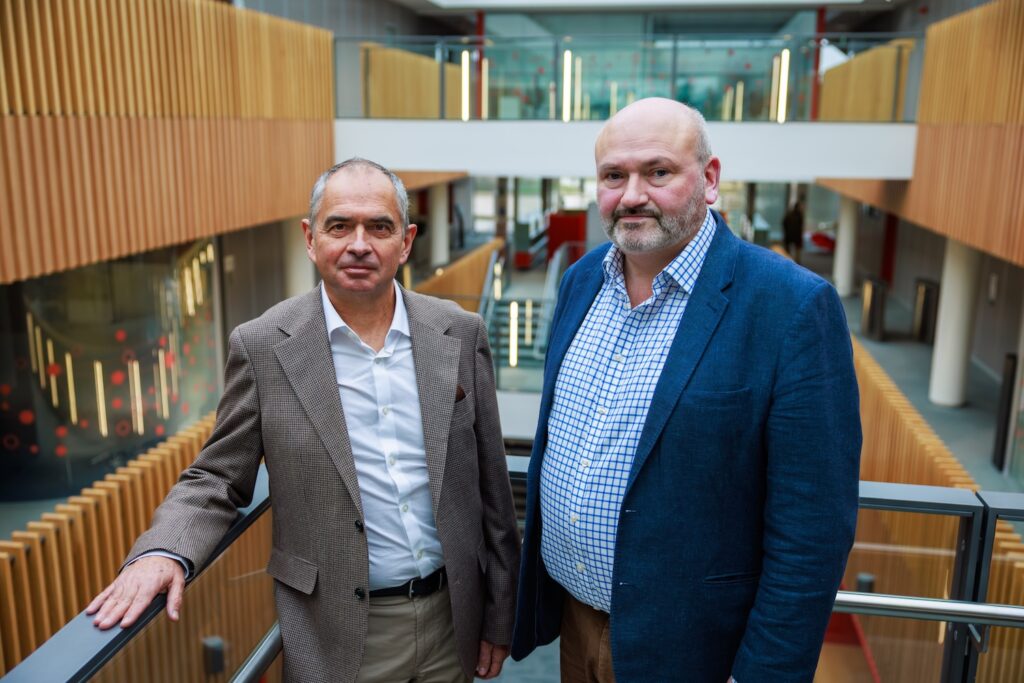
    We’re also excited to mark a significant expansion to our leadership team in 2026, welcoming our Executive Head, Philippe Sanseau, who brings with him decades of expertise from pharma and open data initiatives. A firm believer in collaboration and data sharing for the benefit of both the public and private sector, Philippe’s understanding of the biodata landscape and experience of bringing people together will be instrumental in developing GBC’s membership and driving the organisation forward.   

    Left to right: Executive Head of GBC, Philippe Sanseau, and Scientific Head of GBC, Guy Cochrane.
    Photo Credit: Jeff Dowling

    Building on the strong foundations set by our previous host, the Human Frontier Science Programme Organisation (HFSPO), our secretariat’s new location at EMBL’s European Bioinformatics Institute (EMBL-EBI) at the Wellcome Genome Campus in Hinxton, UK, places us within one of the world’s largest concentrations of scientific and biodata expertise.

    Harness the moment  

    While biodata resources continue to face deep funding uncertainty, these threats to their future – and the future of research – can be harnessed as a powerful lens through which to magnify the visibility of a long standing challenge. 

    Though the moment brings with it substantial challenges, we must not allow it to distract us from seizing this window of recognition of the need to protect global biodata and our access to it. We should use this as a platform from which to renew our efforts and amplify our message.

    Can you help us to call on leaders, policy-makers, and funders worldwide to commit to sustainable, long-term support for the global biodata infrastructure? You can make a difference by signing the Open Letter.

  • Strengthening our understanding of the Global Biodata Landscape: An invitation to engage with the GBC Inventory

    Strengthening our understanding of the Global Biodata Landscape: An invitation to engage with the GBC Inventory

    In October 2025, our Scientific Head Guy Cochrane spoke at the Living Data 2025 conference in Bogotá. He shared a message that lies at the heart of the Global Biodata Coalition’s mission: to understand, support, and sustain the global network of biodata resources that underpin life science research.

    That message bears repeating here, because it concerns something fundamental to our collective work — the GBC Inventory of Global Biodata Resources.

    What is the GBC Inventory?

    The Inventory is a living record of biodata resources from around the world — those databases, knowledgebases, and repositories that collect, curate, preserve, and share biological data. It represents a unique, global overview of the biodata ecosystem and serves as a foundation for many of the GBC’s activities, including our analyses of impact, interdependence, and sustainability.

    Why the Inventory matters

    By maintaining a comprehensive picture of the biodata landscape, the GBC can track the health and sustainability of critical data resources, identify gaps and overlaps across domains and regions and provide evidence to funders and policymakers about the essential role these resources play in advancing science and innovation.

    In short, the Inventory helps ensure that the world’s biodata infrastructure is visible, valued, and supported for the long term.

    How you can help

    The inventory makes use of open bibliometric data, available from Europe PMC, to identify resources through articles published by resource owners to alert the scientific community to the availability and utility of the biodata resource. If you have published a paper that describes a biodata resource, you should find your resource named in our inventory. The most practical way to check whether a resource is included is to search our Global Inventory List on the GBC website where you can view the full list of resources currently captured and see whether your own is represented.

    If your resource is not yet represented please drop us a line at:

    The global biodata ecosystem is dynamic and diverse, and its strength depends on engagement from those who build and maintain it. Your input helps strengthen the completeness and accuracy of the Inventory, and ensures your resource’s contribution to global science is recognised.

    Together, we can make sure that the global biodata infrastructure is not only visible, but resilient — built on shared understanding, mutual recognition, and sustained support.

  • Executive Director’s Blog: Why Sharing Biological Data is an Imperative, Not Simply an Option

    Imagine it’s early 2020 and there are signs of a major infectious disease outbreak. It’s a virus and you have taken samples and generated a sequence. Your first step is to compare your new sequence to what’s already in the databases. Fortunately, you have matches; because over the last decade or so, scientists have diligently shared some 30,000 coronavirus sequences in public databases, prior to the emergence of SARS-CoV-2. This gives you rapid access to some key tools to tackle the outbreak: you can identify the evolutionary lineage of the virus–what it’s closest to; you can make inferences about the biology, transmission and infection processes of the new virus–based on what’s known about the viruses already sequenced; and you can start to design therapeutic and vaccine pipelines.

    But imagine a different scenario in which previous scientists had not made their coronavirus sequences available. You would be working in the dark, unable to identify and characterise the pathogen you were facing. The public health response would be delayed and less targeted, and work towards therapeutics and vaccines would be delayed by months at best.

    Although in this example, the submitters of the preceding coronavirus sequences did not know how and when their data would be useful, it transpired that they were important. This is a general pattern; while those releasing scientific data openly cannot predict future use, it is essential that future use be enabled by submission to public databases. The investment is now; the return on investment is later.

    There’s a behavioural phenomenon known as present bias – our tendency to prioritise actions with immediate benefits over those that pay off in the future. This risks playing out powerfully in the life sciences. Depositing data in community-endorsed repositories takes time, and does not always deliver instant rewards. There are often no strong incentives to publish well-curated data unless it’s explicitly required, such as by funding bodies or journals. As a result, data are at risk of being lost or left inaccessible.

    The problem is that future research depends on today’s data. The reference data for, and software tools of, tomorrow – the models, predictors, diagnostics – will only be as good as the data we collect today. If we only build with outdated, incomplete, or skewed data, our science will be lacking.

    Take the example of an ecologically damaging invasive species. If someone identifies a new species or variant in a region and fails to register the key features that allow its identification, and/or fails to record publicly its presence in a given region, then, future researchers may be unable to recognise it and identify it as a repeat presence in the region. The onward risk, then, is that the chance is missed to intervene, track its spread, or understand its impact, simply because the essential data wasn’t available when it was most needed.

    This is why comprehensive, continual data deposition must become a valued and recognised part of research practice. Shared data doesn’t just help others — it helps a scientist, their future self, and their field. It preserves the value of experimentation and ensures that today’s science remains actionable tomorrow.

    We must align incentives, reduce friction, and instill a culture where sharing data is the norm and not the exception. Simply put, if your data isn’t in the system, then the system can’t work for you and other scientists around you.

  • Executive Director’s Blog: Safeguarding Global Biodata Resources in a Challenging Funding Landscape

    Ensuring the long-term sustainability of the world’s key biodata resources is central to the mission of the Global Biodata Coalition. These resources are vital to the global life sciences research ecosystem, enabling discovery, innovation, and collaboration across borders. However, their sustainability depends on a stable and resilient funding environment — something that, increasingly, cannot be taken for granted.

    Currently, some 32 of the 52 Global Core Biodata Resources (GCBRs) designated by the GBC receive funding from US federal funding agencies, and we estimate that for 26 GCBRs, this is their primary or critical funding source. Recent changes in US policy that impact these funding streams now present immediate and urgent challenges for many of the GCBRs, in certain cases threatening their continued existence. While the motivations behind these changes lie within national policy decisions, their effects are felt globally. Such is the complex web of international data flows, collaborations and co-dependencies amongst the GCBR set and the wider biodata infrastructure, that it is likely that many GCBRs not directly supported by US federal agencies could also be severely affected by any funding cuts to federally funded resources, causing knock-on impacts for researchers worldwide.

    National science funding policy is the business of nations and, rightly, each will increase or reduce financial support for biodata infrastructure according to their national priorities. A biodata infrastructure operated and used globally must expect that, over time, there will be such policy changes. However, smooth and continuous operation of the infrastructure requires a consistent funding environment that is neither sensitive to, nor overly reliant upon, any single funding source.

    Concerns shared with us by GCBRs at a recent meeting of the managers of these resources made clear the scale and immediacy of the negative impacts being faced by more than half of the represented resources as a direct result of recent changes in US federal life science funding policies. Many GCBRs rely heavily on US funding streams and new restrictions, particularly those affecting sub-awards to overseas partners, are already disrupting international collaborations and causing institutional uncertainty. Several GCBRs are reporting that changes will apply from 1 July 2025, leaving little time to adapt. These challenges compound longstanding difficulties in demonstrating the full impact and value of open biodata resources, which often struggle to track data usage in ways that resonate with funders or policymakers.

    Already, some GCBRs have been taking action to try to prop up their resources in the face of funding cuts, including, for example, by launching international emergency fundraising campaigns—requesting voluntary contributions and user‑fees, including dedicated mechanisms for European and US labs to donate, and temporarily freezing database updates, in an attempt to survive. Other data resources are exploring a range of measures, including diversifying their funding base through partnerships with industry, charging for training services, and seeking contributions from commercial data users. In parallel, many are working to strengthen their advocacy efforts to better demonstrate their global scientific impact, in an effort to attract support from new funders and philanthropic organisations. While some are adopting a “wait and see” approach, whilst preparing for a worst-case scenario. In addition, various attempts are being made, by groups around the world, to identify, copy, and protect what are felt to be key at-risk datasets.

    It is important to note that these risks are illustrative of the wider vulnerability of biodata resources under the existing funding model for global biodata infrastructure — a model that depends heavily on a small number of major national funders. This is not sustainable and the GBC’s strategic focus remains on building a diversified and resilient funding base for biodata resources, one that does not run the risk of a single point of failure.

    Work is already underway within the GBC to build a more granular picture of the funding situation for GCBRs, documenting the specific challenges they face, and their potential mitigation strategies. As part of our commitment to facilitating greater visibility for GCBRs and helping them to articulate their impact and value to the wider community, we will present this important evidence base to the GBC’s member funders to characterise the problems of the current funding landscape.

    We undertake to continue to support and strengthen connections between GCBRs, funders, and other stakeholders, using our best efforts to ensure that these vital resources can continue to serve the global scientific community — and society — for the long term.

    Please support us by signing our Open Letter that calls on leaders, policy‑makers, and funders worldwide to commit to sustainable, long-term support for the global biodata infrastructure. See the Open Letter page.

  • Executive Director’s Blog: Innovative Funding Models for a Sustainable Biodata Future

    In the rapidly evolving landscape of life sciences, biodata resources are indispensable. They underpin research across disciplines, providing essential data that drives innovation and discovery. However, the sustainability of these resources is a growing concern. Traditional funding mechanisms, often reliant on short-term grants, are proving inadequate for the long-term maintenance and development of these critical data resources. To address this, the Global Biodata Coalition (GBC) is working with its community of funders and resource managers, as well as tapping into new thinking from other sector experts, including economists and technology specialists, to explore innovative funding models that have the potential to support a sustainable future for biodata.

    Our White Paper, Working Cooperatively for Biodata Resource Sustainability emphasises the need to develop and pilot a range of cooperative funding approaches.  It highlights the need to develop approaches that build on existing funding models and could be implemented in the relatively near term – such as distributed service and pooled funding approaches – whilst working in parallel to explore more transformative approaches that would take longer to implement but be more impactful in achieving a sustainable biodata infrastructure in the longer term.

    There is some support for a pooled funding approach in which funding agencies allocate a fixed percentage of their research grant budgets to an agreed set of core data resources. These funds would be distributed based on well-defined criteria, ensuring that essential databases receive consistent support.  A 2018 paper by researchers at the SIB Swiss Institute for Bioinformatics proposes a mechanism of this type (which it terms the Infrastructural Model) and estimates that it would require less than 1% of the total amount dedicated to life science research grants to cover the costs of funding core data resources worldwide.

    In practice, the challenges of establishing such a fund would however be considerable.  With the growing volume of research data and rapid rise of AI and data science technologies, such approaches may still not scale. We need to cast the net wider and also consider other innovative models and ideas.

    In a recent pre-print entitled The Biological Data Sustainability Paradox, Johnson and Bourne discuss the application of a cap-and-trade model to biodata funding. Traditionally used in environmental policy to control pollution by providing economic incentives, a cap-and-trade system has the potential to be adapted to allocate funding responsibilities among stakeholders. In this context, organisations would have a capped obligation to support biodata resources but could trade these obligations, creating a market-driven approach to funding distribution. This model aims to balance the funding landscape, ensuring that all beneficiaries of biodata resources contribute to their sustainability. The model takes us a very long way from where we are now – likely too far for many – and challenges some long-established values around open and free access to data, yet it argues that radical re-thinking will be required.

    Securing a sustainable future for biodata requires reimagining traditional funding approaches. By working cooperatively to explore a range of models – from pooled funding approaches to more novel approaches such as cap-and-trade, we can build a robust and enduring funding ecosystem for the biodata resources that are vital to scientific progress. The GBC is committed to driving this charge, fostering collaboration among international funders and stakeholders to ensure that essential biodata resources remain available to researchers worldwide for generations to come.

  • Working Cooperatively for Global Biodata Resource Sustainability

    Guy Cochrane, Executive Director, Global Biodata Coalition (GBC)

    The publication by the GBC of its White Paper entitled “Working Cooperatively for Global Biodata Resource Sustainability”, marks a pivotal moment for the community of life science biodata funders, policy makers and resource providers. This comprehensive White Paper, developed in partnership with GBC members and shaped by input and feedback from biodata resources and other stakeholders lays out a roadmap to address one of the most pressing challenges in the life sciences: the sustainability of critical biodata resources.

    Biodata resources are the backbone of modern life sciences and biomedical research. They enable groundbreaking discoveries, drive innovation, and support the FAIR principles – ensuring data are findable, accessible, interoperable, and reusable. Yet, these vital resources face mounting pressures. Fragmented, short-term funding jeopardises their ability to serve global research communities effectively and equitably. The escalating demands of data-intensive science and AI-ready datasets add further complexity to this challenge.

    The White Paper presents a framework to tackle these issues through cooperative global action. It recommends adopting foundational principles to guide sustainability efforts, developing innovative funding mechanisms, and fostering coordination among funders to secure the future of biodata infrastructure. Importantly, in addition, it will guide the GBC in the role it will play in achieving greater sustainability for biodata resources. A key focus of our work is the Global Core Biodata Resources (GCBRs) programme—52 resources identified as fundamental to global research. These resources exemplify the immense value of biodata infrastructure, but they also highlight the vulnerabilities inherent in current funding models. To address this, we must explore diverse approaches, including pooled funding, distributed service models, and public-private partnerships.

    The challenge of biodata sustainability transcends national and disciplinary boundaries. It requires global commitment and innovation. As the first coalition of its kind, GBC is uniquely positioned to lead this charge, but success depends on the collective efforts of funders, researchers, policymakers, and the broader scientific community.

    We invite you to engage with this White Paper and join the conversation, either here on LinkedIn or via email to and collaborate on solutions that ensure the sustainability of biodata resources for the benefit of science and society worldwide. Together, we can turn this vision into reality.

  • Executive Director’s Blog Post for launch of Open Letter Campaign

    Join us in securing the future of global biodata: an open call to ensure sustainable support for life science data

    In today’s age of rapid scientific advance, the life sciences are producing an unprecedented wealth of data that is transforming how we understand, treat, and respond to the world’s most pressing health, environmental, and food security challenges. From genomics and imaging to biodiversity studies, life science data resources underpin groundbreaking discoveries, empower global responses to crises, and enable innovations that impact lives around the world.

    But the infrastructure that makes this possible—our global network of biodata resources—is under serious threat. Many critical data resources struggle to secure funding for their long-term sustainability, and the current piecemeal approach to supporting them jeopardises their capacity to grow, innovate, and maintain high standards of quality and accessibility. Without sustainable support, the very foundation of modern scientific discovery could face instability, undermining our ability to address future challenges.

    This is why the Global Biodata Coalition (GBC) has launched an Open Letter to rally life science leaders, policy-makers, and supporters worldwide to advocate for solutions that bring sustainability. By signing this letter, you join other prominent voices in the scientific community who believe that biodata is not just an asset but a necessity for a healthier, more resilient world. We urge you to stand with us in calling for the development and adoption of new models that support the long-term integrity and development of global biodata resources.

    The Open Letter is a collective plea to safeguard our shared scientific future. It is an invitation to all stakeholders to support a future where life-saving discoveries are not hindered by uncertain foundations. We are calling on you to add your voice, to lend your influence, and to stand with other leaders in ensuring that our global network of biodata resources is sustained and can thrive into the future.

    Act now. Sign the Open Letter, and let’s protect the lifeblood of life science research—together.

  • GBC’s Executive Director considers how we assess the impact of the global biodata resource infrastructure

    How do we assess both the impact of the biodata resource infrastructure on the delivery of life and biomedical science research programmes, and the societal benefits they generate? Both questions are critical to policy development and decision making around future investment into the infrastructure.

    Accurately assessing impact would be straightforward if we were able to track who is accessing the resources that comprise the infrastructure; what data they are using; and how they are utilising those data. However, the vast majority of biodata resources are, and should remain, completely open—not requiring users to identify themselves—so the “who” is always unknown. The tremendous quantities of data that are used and the challenge of connecting access to specific datasets or information with research outcomes, also preclude knowing the “what” and the ”how”. 

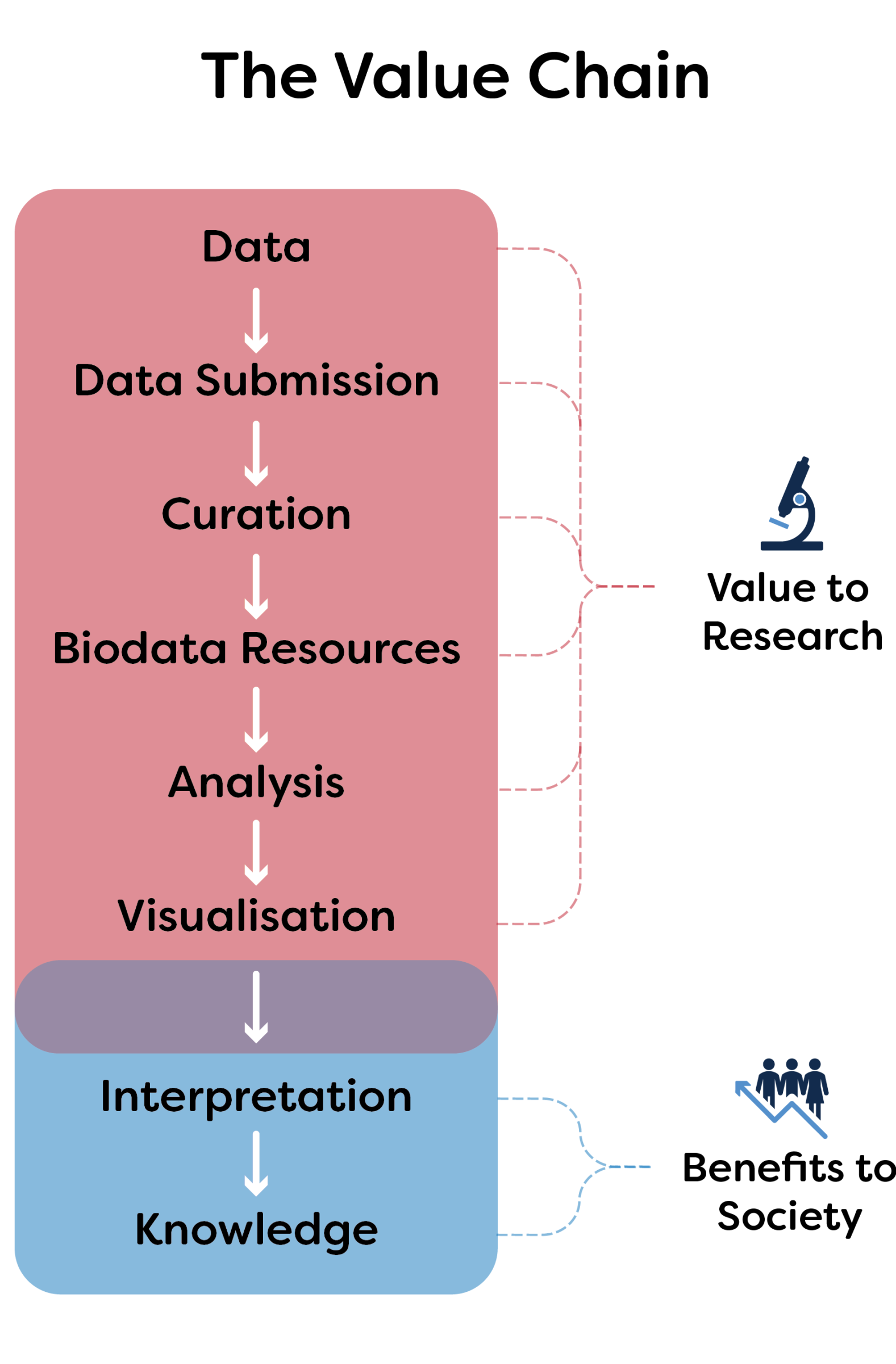
    Consequently, the tracking of value from biodata, to knowledge and then to societal outcomes is challenging. Beyond assessing rates of access to websites and counting citations, it is typically impossible to put in place systematic monitoring. Rather, impact assessment must rely to a great extent on anecdotes, or impact stories, that describe particular outcomes. These can then be overlain with data and tool provenance information, where this is available, to create illuminating narratives. 

    One such example narrative comes from the antiviral drug Molnupiravir, which was repurposed rapidly during the COVID-19 pandemic for the treatment of SARS-CoV-2 infections. This narrative begins with some 30,000 coronavirus sequences that had already been deposited and made openly available in biodata resources before COVID-19.

    Over time, these records have contributed to our understanding of the basic biology of these viruses and, in particular, the role of RNA-dependent RNA polymerases in their replication. Identification of nucleoside analogues with the potential to disrupt viral replication using protein and nucleoside structure records, complemented with open clinical trials data demonstrating the safety of using Molnupiravir in patients, allowed rapid screening of existing drugs, with Molnupiravir being identified as a potential treatment as a mutagen that disrupts viral replication, and then put rapidly to therapeutic use around the world.

    Illustration of Molnupiravir

    Molnupiravir: an antiviral rapidly repurposed for COVID-19 with support from biodata resources. Structure source wwPDB, image from JSmol server St Olaf College, USA.

    Along this chain of events, at least four open biodata resources would have been critical in making data available; these include the Worldwide Protein Data Bank, databases of the International Nucleotide Sequence Database Collaboration, PubChem and ClinicalTrials.gov. However, neither the biodata resources nor the data records within them capture these final outcomes and there is no systematic reporting mechanism for tracking usage and associated impact stories.

    Image showing how data leads to analysis, interpretation, knowledge then benefits to society

    Impact assessment is essential but challenging for organisations involved in the biodata infrastructure parts of these value chains. These organisations are those that develop biodata infrastructure assets, such as data standards (e.g. the Genomics Standards Consortium and Global Alliance for Genomics and Health), aggregated biodata service providers (e.g. the Swiss Institute for Bioinformatics, EMBL’s European Bioinformatics Institute), developers of biodata resource sustainability models (Global Biodata Coalition) and tool and workflow developers (e.g. Galaxy, NextFlow communities).

    The ability to demonstrate impact is essential as it supports strategic planning, stakeholder engagement and opens access to funding to sustain these activities. It is challenging for the reasons given above—there is no systematic mechanism to capture and evaluate impactful outcomes. However, while each organisation that provides these assets has its own niche, all contribute in some way to the same overall impact value chain. There is great potential for the sharing of impact stories among the entities represented along the impact value chain and the Global Biodata Coalition is prioritising the assessment of impact among its strategic objectives.

  • GBC’s Program Manager reflects on our deepening understanding of the global biodata infrastructure

    The term infrastructure is widely used, but has multiple meanings and instances, some of which, especially in the context of the life sciences, are not well known or understood. A dictionary definition suggests an infrastructure to be “the basic physical and organisational structures and facilities (e.g., buildings, roads, power supplies) needed for the operation of a society or enterprise.” Societal infrastructures include the electrical grid, road networks, water works, and many others. We are also familiar with big scientific infrastructures such as the Large Hadron Collider at CERN and large telescopes, whether on land, such as Keck 1 and Keck 2 in Hawaii, or in space, such as the Hubble. These infrastructures, whether societal or scientific, share a common feature: they are physical entities that we can see and perceive as constructed objects.

    The life sciences also has an infrastructure, in the form of databases that archive primary research data, and knowledgebases that store, provide added-value analysis, and share data generated by researchers around the world. Collectively, we term these components biodata resources. Life scientists, biologists, and biomedical researchers are, as GBC Executive Director, Guy Cochrane noted in a previous blog, critically dependent on these resources for their work.

    Unlike the physical infrastructures I have described, this infrastructure is distributed and largely hidden: its physical components are racks of computers and disks hosted in out-of-the-way data centres. It is managed by staff scattered around the world in offices and laboratories, within Institutes and universities. However, to date we do not have an accurate idea of how the infrastructure is financially supported. Large physical scientific infrastructures are typically the result of a centrally planned project with bespoke, well-described public funding allocated to support them. By contrast, the global biodata infrastructure is funded by thousands of entities, large and small, distributed throughout the globe, with this opacity adding to the challenge of understanding its scale and devising more sustainable ways of supporting it.

    In order to arrive at a basic overview of this scope, the GBC has recently completed a reproducible global inventory of biodata resources that provides a baseline description of the infrastructure: the number of resources in existence, where they are located and who funds them.

    Past efforts to describe the infrastructure have relied either on self-reporting by resource managers or curation by various funding bodies, professional bodies, or interested researchers. Both approaches are valuable, but have proven difficult to sustain: resource managers are overstretched and challenged to find time to report their resources, and efforts to actively collect resources as they are developed are inherently unsystematic.

    We sought to develop a method of assembling an inventory that was not dependent on self-reporting or on active curation, but was nevertheless reproducible at relatively low effort. This was achieved by taking advantage of the very large, open, and searchable corpus of life sciences literature in EuropePMC to develop a machine learning-enabled method to produce an inventory of resources that can be repeated periodically and does not require a continuous funding stream.

    The details of the methodology are described in two manuscripts1,2, and summarised in the figure. We identified 3112 biodata resources described in EuropePMC. They are distributed throughout the world, but not surprisingly are concentrated in higher income countries. This is certainly an undercount, since resources that have not published a description of themselves are not in our inventory.

    While this one-of-a-kind study is not an end in itself, it provides a jumping off point for further exploration and we invite others to download the files and continue, or possibly expand, the analysis to help build our collective understanding of the global infrastructure, thereby serving our overall efforts towards biodata sustainability.

    Inventory methodology


    1 Imker HJ, Schackart KE III, Istrate A-M, Cook CE. 2023. A machine learning-enabled open biodata resource inventory from the scientific literature. PLoS ONE 18(11): e0294812. https://doi.org/10.1371/journal.pone.0294812
    2 Imker HJ, Schackart KE III, Istrate A-M, Cook CE. 2023. Detailed Implementation of a Reproducible Machine Learning-Enabled Workflow. Preprint: https://zenodo.org/doi/10.5281/zenodo.7767793