

Our Scientific Head, Guy Cochrane, on funding and sustainability challenges and building a secure future for open access biodata resources.
The question of how to develop sustainability and funding models for open biodata resources is not a new challenge and has long been recognised as key to the future of research. But ever advancing technologies, an increasing user base and increased levels of funding uncertainty have thrown fresh light on the urgency of GBC’s mission.
Biodata is imperative to human health and the planet. Impacting everything from rare disease research to conservation and food sustainability, open access to biodata is enabling researchers to stop foodborne outbreaks in their tracks, discover therapeutic pathways for previously untreatable conditions and inform policy decisions on land use and harvest yields.
To illustrate in numbers, almost a million scholarly articles from around the world reference at least one dataset from a GBC Global Core Biodata Resource.
But without sustainability, we stand to lose access to the resources which are enabling breakthrough discoveries and innovation.
An uncertain funding landscape
Biodata resources have grown over the decades to provide an essential foundation for the life sciences. However this growth has typically been led from the grassroots, by scientists and engineers keen to build and open resources for their communities. A growing global dependency on many of these resources has not been accompanied by sufficient international cooperation between funders, whose research programmes depend upon these resources.
As a result, many of the most heavily utilised databases exist with only the support of short-term grants from a limited number of funders, and many lack a funding window wide enough to allow appropriate strategic planning for staff and services.
The opportunities of modern data science, such as use of Artificial Intelligence, international goals for open access, the need for transparency in science, are all welcomed by those who manage biodata resources, but they bring additional demand on the services provided by their already challenged biodata resources.
The vulnerability of biodata resources is illustrated clearly by recent events, in which funding has been reduced and interrupted as a result of changes in national political strategies.
Now is the time we must act; we must safeguard the future of our biodata resources which are so important for advancing life science, biomedical and biodiversity research.
A path forward in 2026
In 2026, the GBC will work towards a number of pilot projects assessing the viability of different sustainability models for open databases. Biodata resources, in particular the Global Core Biodata Resources, will work with GBC Members and funders to implement and explore steps towards greater sustainability.
To ensure we are able to gather comprehensive and globally representative results from this work, we are searching for new funding organisations to join our membership and bring their voices to the table. Additionally, we invite biodata resources of all types to engage with our Global Core Biodata Resources and Inventory programmes.
A culture of collaboration
We’re also excited to mark a significant expansion to our leadership team in 2026, welcoming our Executive Head, Philippe Sanseau, who brings with him decades of expertise from pharma and open data initiatives. A firm believer in collaboration and data sharing for the benefit of both the public and private sector, Philippe’s understanding of the biodata landscape and experience of bringing people together will be instrumental in developing GBC’s membership and driving the organisation forward.
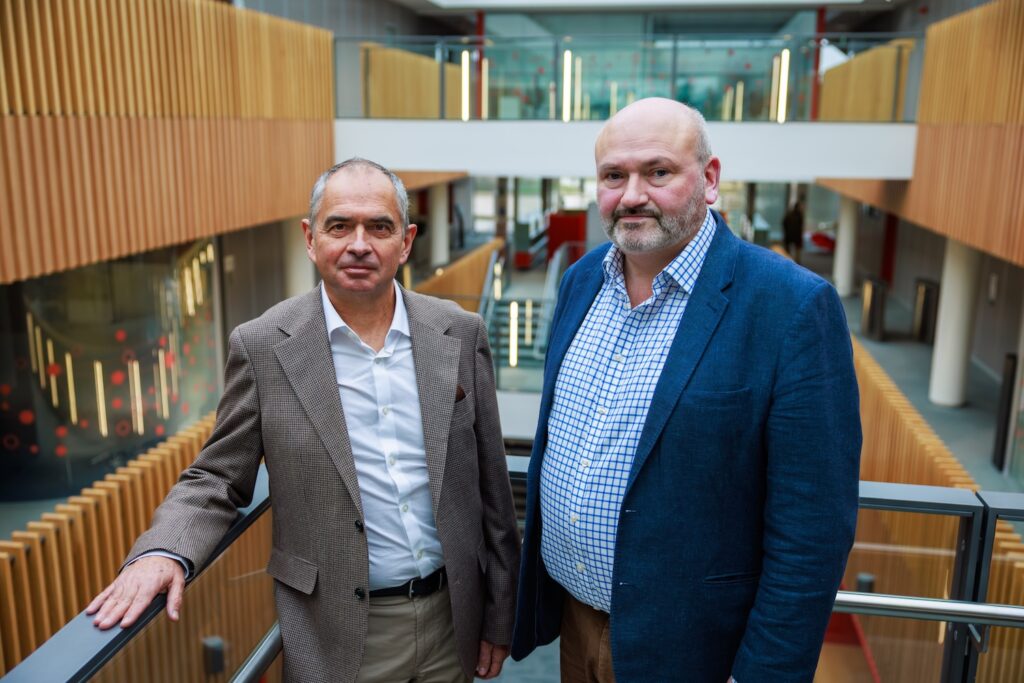
Photo Credit: Jeff Dowling
Building on the strong foundations set by our previous host, the Human Frontier Science Programme Organisation (HFSPO), our secretariat’s new location at EMBL’s European Bioinformatics Institute (EMBL-EBI) at the Wellcome Genome Campus in Hinxton, UK, places us within one of the world’s largest concentrations of scientific and biodata expertise.
Harness the moment
While biodata resources continue to face deep funding uncertainty, these threats to their future – and the future of research – can be harnessed as a powerful lens through which to magnify the visibility of a long standing challenge.
Though the moment brings with it substantial challenges, we must not allow it to distract us from seizing this window of recognition of the need to protect global biodata and our access to it. We should use this as a platform from which to renew our efforts and amplify our message.
Can you help us to call on leaders, policy-makers, and funders worldwide to commit to sustainable, long-term support for the global biodata infrastructure? You can make a difference by signing the Open Letter.