The Global Biodata Coalition (GBC) is delighted to welcome seven new members to its Scientific Advisory Committee (SAC), strengthening the breadth of expertise that will guide GBC’s work to safeguard the world’s open life science, biological and biomedical data.
The SAC provides scientific advice to the GBC Board of Funders and Executive Head on the development and delivery of GBC’s mission. Five new members joined the Committee in July:
Eric Green, Chief Medical Officer, Illumina, Inc., USA
Namshik Han, Head of Computational Research & AI, Milner Therapeutics Institute, University of Cambridge, UK and Professor, Department of Quantum Information, Yonsei University, South Korea
Gitte Neubauer, VP Omics Technologies GSK and Founder and Managing Director, Cellzome, Germany
Guilherme Oliveira, Biodiversity strategy and nature impact consultant and Visiting Senior Professor, Department of Genetics, Universidade Federal do Pará, Brazil
Saurabh Raghuvanshi, Professor in the Department of Plant Molecular Biology, University of Delhi South Campus, New Delhi, India
They are joined by Jeff Christiansen, Director of Australian BioCommons and Roderic Guigó, Professor of Bioinformatics and Coordinator of the Bioinformatics and Genomics Programme at the Centre for Genomic Regulation (CRG).
Together, the new members bring diverse expertise spanning artificial intelligence, computational biology, genomics, plant science, biodiversity, biotechnology, health data and research infrastructure. Their perspectives will complement those of existing Committee members Varsha Khodiyar and Nicola Mulder, who continues as Interim Chair.
Philippe Sanseau, Executive Head of GBC, said: “I would like to thank all of our advisors who have recently stepped down from the committee and who helped oversee key decisions in early 2026 including the move to our new hosts EMBL-EBI and our growth since receiving EU funding in addition to member support.
We are thrilled to welcome eminent scientific leaders to the Scientific Advisory Committee. Their collective experience, across disciplines, sectors and regions will be invaluable as we deliver our new strategy over the next few years. The diversity of perspectives they bring will help us work with funders and biodata resource managers to build a more sustainable, resilient and equitable global biodata infrastructure.”
The expanded SAC complements GBC’s new strategy for 2026-2030, which commits to diversifying and expanding its community, developing practical approaches to sustainability, and improving the analytical capability that supports funding decisions. It will help ensure that GBC is aware of emerging issues and activities are fully informed by the needs and opportunities across the global biodata ecosystem.
The Global Biodata Coalition (GBC) is launching a new seminar series to capture and explore insights and ideas on biodata sustainability from funders, platform providers and researchers.
Our online Sustainability in Practice seminar series will allow GBC members, Global Core Biodata Resources and the wider biodata community to:
learn from one another
share practical solutions
discuss key sustainability challenges
explore new ideas for securing the future of biodata resources
In the first seminar, taking place on Wednesday 16th September at 1-2pm (UK time), the GBC Secretariat team will provide an overview of the new GBC strategy, outline our key activities and introduce plans for collaborative pilot projects assessing the viability of different sustainability models for biodata resources.
Future seminars will feature external speakers covering topics relevant to biodata sustainability, open research and data science. Designed as a forum for discussion, each seminar will start with short presentations, followed by audience questions and input.
The Global Biodata Coalition has launched a new strategy 2026-2030 setting out its priorities for the coming years, with a focus on expanding its global community, increasing visibility and developing practical approaches to biodata sustainability. The strategy will guide GBC’s work as it continues to respond to emerging challenges and opportunities in biodata sustainability.
Biodata resources provide essential infrastructure for research across health, agriculture, biodiversity, environmental science and biotechnology. They are also becoming increasingly important for emerging and rapidly evolving technologies, including artificial intelligence. Yet despite their critical role, many of these resources continue to face uncertain long-term funding.
Philippe Sanseau, Executive Head of GBC, said “This strategy represents an important acceleration of GBC’s activities by being not only the unique global forum for discussing and addressing biodata resources sustainability among funders but also becoming a more action-oriented organisation. We are building an engaged community around the GBC vision and I’m looking forward to working with our members, observers, Global Core Biodata Resources and Scientific Advisory Committee to create lasting impact for the global biodata community.”
From strategy to action
Having started to build an engaged community, demonstrated the value of biodata resources and shaped international discussions about sustainability of biodata resources, the GBC will accelerate its engagement with diverse stakeholders and increase its efforts on practical outcomes for funders, resource owners and biodata users. Over the next five years, GBC will focus on five strategic priorities.
Refreshing its governance and operating model to support a growing and more diverse global community,
Expanding engagement with funders from different regions and sectors, including industry and philanthropy.
Strengthening partnerships with biodata resource providers and supporting the continued development of the Global Core Biodata Resources.
Piloting and evaluating innovative sustainability models that can inform future investment approaches.
Raising GBC’s visibility and communicating the value of sustained investment in biodata infrastructure to funders, policymakers and the wider research community.
Building on success
Over the past five years, the Global Biodata Coalition has built strong relationships with funders, policymakers, international organisations and the global biodata community. During this time, the GBC completed an inventory of global biodata resources, established a network of 52 Global Core Biodata Resources (GCBRs), selected through a rigorous expert-led process, and has carried out research to better understand their global use and impact.
Together, this work has shaped a White Paper highlighting the sustainability challenges facing biodata resources and setting out nine principles and potential models for international collaboration to help secure their long-term future.
Read more
The Global Biodata Coalition Strategy 2026–2030 is available to read here.
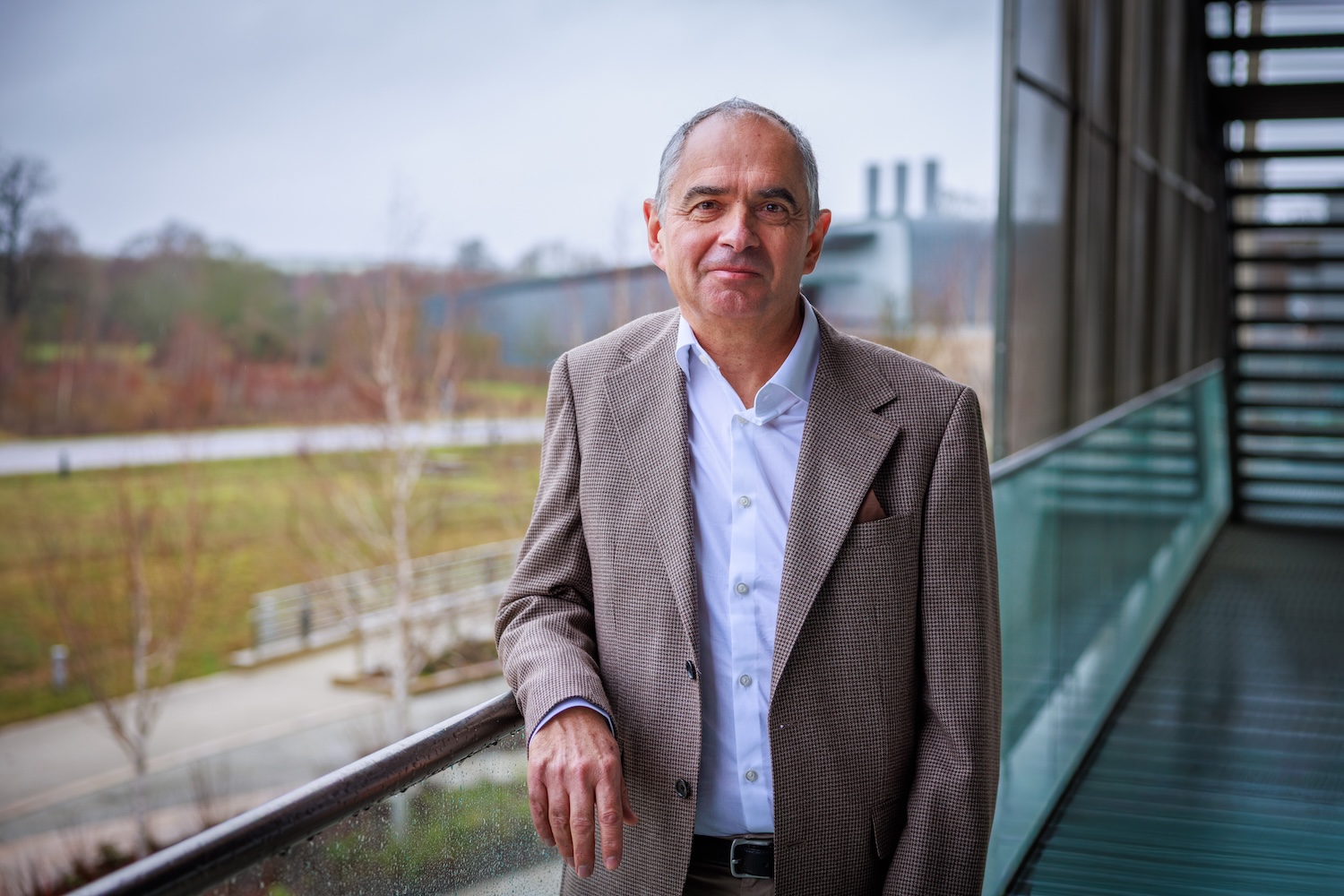
Philippe Sanseau, Executive Head of GBC Photo Credit: Jeff Dowling
GBC’s first Executive Head on his career in industry, open data advocacy and the advice he would give his younger self.
Before he officially steps into the role of GBC Executive Head at the end of March, we caught up with Philippe Sanseau where he reflected on a career in industry and his future plans for the Coalition.
Q: You spent more than 30 years at GlaxoSmithKline, including in the roles of Senior Director of Computational Biology and Head of In Silico Target Biology. How did your experience in industry shape your perspective on open data?
Working in biomedical research and drug discovery, I know that access to open data is foundational to what we do. For example the GWAS (Genome Wide Association Study) Catalogue is used extensively to support research at GSK.
Many companies are using open data to identify new drug targets – which provides further evidence that these resources are fundamental to biomedical research and drug discovery.
Q: When’s a moment where you saw the impact of biodata that really stuck with you?
Going back many, many moons – before the Human Genome Project – there was a resource capturing ESTs, Expressed Sequence Tags, which held sequencing data from mRNA.
That database was an eye-opener for me. Seeing that we could freely access all of this data to support our research was very inspiring and opened my eyes to what could be possible.
Q: What drew you to working with GBC?
I started because I am a believer in access to open data and because I want to use my industry experience to support the work of GBC. There are many brilliant academic and research organisations already involved, but there is also the industry perspective – and not only from a pharma perspective.
For example, in addition to biomedical research, open life science data is also extremely important in animal health, food production and even tracking and responding to climate change.
And of course, there is the unstoppable rise of advanced Artificial Intelligence and Machine Learning techniques. Having access to open data has opened the door to many many players, be they academic or non-academic, to generate new knowledge. One of the best examples we can point to is the use of data from Uniprot and the Protein Data Bank (PDB) to enable the development of AlphaFold.
I’ve joined GBC because I want to highlight the importance of sustaining a globally reaching, high quality, open data ecosystem.
Q: In your view, what are the essential elements needed to build a sustainable future for biodata resources?
We need to think about long-term funding solutions for these resources. At the moment, most resources are only funded for a certain time – and we need to build more resilience into the system.
To do that, we need funders to come together and to think more broadly than just within their own niche. But it’s not only about funding, we need to consider all of the different people and players involved. For example, it would be great to see industry becoming more involved in addressing the sustainability issue rather than just utilising the data.
Q: What’s one thing everyone working with biodata could do tomorrow to support the future of these resources?
One thing that is part of the sustainability challenge is ensuring that data (and metadata) is captured with agreed standards. When you can apply an agreed standard, it’s much easier to maintain, access and integrate data resources.
And that applies from the very outset, when we begin building databases. If the lab researchers collecting the data are considering how it will be accessed and used, that will be key to supporting sustainability.
Q: You’re joining GBC at an exciting time, with the team expanding significantly and as we welcome a grant from the European Commission. What key milestones do you have in your sights for the Coalition in the next five years?
Broadly, the vision is to secure the future of key life sciences resources and to ensure there is more funding resilience built into the ecosystem. The aim is, with the support of our members and partners, to develop a vibrant community and identify and test various models of sustainability.
The other piece is to recruit more funders to support GBC’s work. A lot of our current funders are from the US and Europe, but to ensure a truly sustainable future we need to diversify across geographies and types of funders. Perhaps in the future we’ll also see other charities and philanthropic organisations become GBC members.
Q: Throughout your career you’ve had a foot in both the public and private worlds – working in pharma and championing open data. For private organisations which might be hesitant about sharing data, what would you say are the benefits?
Private organisations are already using open data and they benefit because of how it accelerates their research. While industry organisations develop their own data, it’s just a fraction of what is available. What is absolutely critical for their success, and I’ve seen it firsthand, is to be ready to integrate internal data with open data.
I believe contributing data to open resources enhances the information you already have. It is deeply within industry interest to collaborate and support the future of open access databases.
Q: What would your message be to any organisation considering becoming a member of the GBC?
Open data is critical to so many aspects of scientific progress, and that includes human health, animal health, food production, climate change and more. By ensuring that data is sustained, high quality, and accessible, we are able to benefit human kind in so many areas and on so many levels.
Q: Looking back, what would you tell your younger self starting out in the field?
Don’t be scared to take risks. I probably didn’t take enough at the beginning. And I would also say, talk to people, network. You don’t know who you’re going to meet. Above all, be curious.
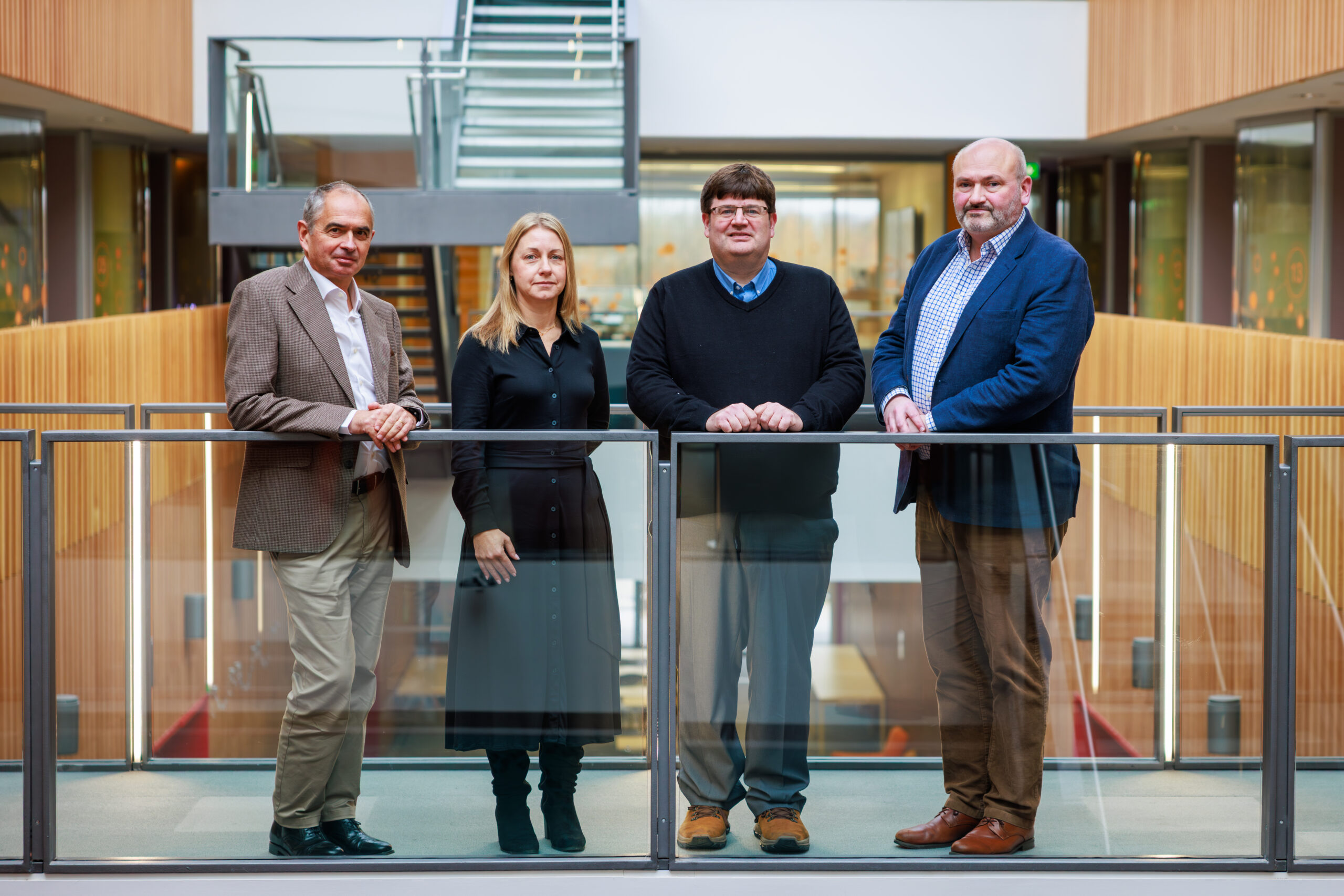
The GBC team. Left to right: Philippe Sanseau, Tracey Mahoney, David Carr, Guy Cochrane. Photo Credit: Jeff Dowling
A multiyear grant will support the Global Biodata Coalition (GBC) as it expands its leadership and confirms EMBL’s European Bioinformatics Institute (EMBL-EBI) as its host organisation.
About:
The EC grants €5 million of Horizon Europe funding to boost efforts to develop sustainable solutions for the future of global biodata
GBC leadership team expands as ex Senior Director of Computational Biology at GlaxoSmithKline, Philippe Sanseau, joins as Executive Head, and EMBL-EBI becomes its host organisation
Expanded funding and strengthened leadership reflect increasing international recognition of the critical role of biodata in enabling research and innovation at a time of uncertainty for open biodata resources
Tuesday, March 3 – Hinxton, UK
Today we announce that the European Commission (EC) is granting the Global Biodata Coalition €5 million over five years to strengthen international efforts to secure sustainable biodata infrastructure.
The EC funding represents a major commitment to the future of open data resources. The grant is part of the 2025 Health Research Work Programme under Horizon Europe, the EU’s largest funding programme for collaborative research and innovation to date.
By providing access to a vast array of scientific data, open access databases across the globe are essential for fostering innovative research and enabling groundbreaking discoveries.
At a time of global funding uncertainty for these initiatives, the EC’s commitment reflects growing international recognition of the vital role of biodata resources in powering the future of research.
Expanded leadership accelerates efforts
In tandem, ex Senior Director of Computational Biology at GlaxoSmithKline (GSK), Philippe Sanseau, joins the team as Executive Head at the end of March. Our current Executive Director Guy Cochrane steps into the full-time role of Scientific Head, marking a significant increase in leadership capacity.
Sanseau brings with him more than 30 years of leadership experience with industry giant GSK – in roles spanning computational biology, governance, drug discovery and partnerships across industry and academia.
On joining the GBC secretariat, Sanseau said: “Throughout my career I’ve seen firsthand the critical impact of open data on biomedical research and beyond. I feel extremely privileged to join the GBC as Executive Head, helping deliver the Coalition’s mission and drive the next stage of development. I look forward to working with partners, stakeholders and my new GBC colleagues.”
David Carr, with the GBC team since 2021, also steps up to become Programme Manager, while Tracey Mahoney from EMBL’s European Bioinformatics Institute (EMBL-EBI) joins us as Events Manager and Administrator. Further staffing is planned for 2026.
New host organisation
We also confirm EMBL-EBI as GBC’s new host organisation, placing our secretariat side-by-side with world leading biodata resources at the Wellcome Genome Campus in Hinxton, Cambridgeshire.
Jo McEntyre, Interim Director of EMBL-EBI said: “The goal of the Global Biodata Coalition is to catalyse the development of mechanisms to sustainably support critical biodata resources.
“The GBC provides a forum for life science research funders and biodata resource managers to explore how this may be achieved globally. This shift is essential for futureproofing global science and enabling discovery. EMBL-EBI is delighted to host the GBC and continue supporting its mission.”
Previously GBC has been hosted by the Human Frontier Science Programme Organisation (HFSPO), an international program of funding for frontier research in the life sciences, which has played a key role in enabling the Coalition to grow to where it is today.
Landmark moments with the HFSPO have included: a seminal meeting of stakeholders in 2016; the launch of GBC’s scientific programme in 2020; establishing the first set of Global Core Biodata Resources in 2022; and the appointment of the Coalition’s first Executive Director, Guy Cochrane.
Looking to the future
The leadership expansion and increased funding reflects growing recognition that global collaboration is essential to sustain biodata resources and secure the future of research and innovation.
Guy Cochrane, Scientific Head of GBC added:
“We’re delighted to receive the support of the EC. The Commission’s experience in the biodata infrastructure domain, along with the funding contribution, will play a significant role in enabling GBC to achieve its goals as we expand our team and strengthen our leadership in 2026, at a time when ensuring sustainable funding has never been more pertinent.”
Open access databases are key for powering new research and discoveries. Almost a million scholarly articles from around the world reference at least one dataset from a GBC Global Core Biodata Resource.
To reach its goal of securing long-term sustainability for biodata infrastructure, GBC will continue to need the support of new and existing members as the volume, breadth and importance of global biodata expand.
If you would like to support the development of sustainable solutions for vital biodata resources, please add your signature to our open letter.
The Global Biodata Coalition announces the publication of a groundbreaking White Paper, Working Cooperatively for Global Biodata Resource Sustainability, that sets out an approach to collective action to enhance the sustainability of biodata resources worldwide. These resources underpin life sciences and biomedical research, but fragmented and uncoordinated funding threatens their long-term viability.
The White Paper identifies nine foundational principles for cooperative funding models, emphasising collective responsibility among life science research funders of all types to sustain essential biodata infrastructure. It also highlights the need to explore new funding mechanisms, including pooled and distributed service models, and advocates for global coordination to ensure equitable and effective resource management.
The GBC has developed this White Paper to address urgent challenges to safeguarding life sciences data, as the volume of open access data increases exponentially and with rapidly growing demand from AI and other data intensive-science approaches. Biodata resources are essential tools enabling research and innovation, yet they often face unstable funding, making it difficult to plan for the long-term or meet the demands of a global user base.
The White Paper builds on the efforts of the GBC Board Working Group on Sustainability and incorporates insights from an open consultation with a wide range of stakeholders. “For the first time, this paper lays out collective views on how the world should approach the biodata infrastructure sustainability challenge,” said Dr Guy Cochrane, Executive Director of the Global Biodata Coalition, adding “We are deeply grateful to the GBC Board of Funders’ Working Group and to everyone who contributed their expertise and perspectives through the consultation process.”
The principles outlined in the White Paper call for equitable contributions from funders, flexible models tailored to funder capabilities, and governance structures that align with funders’ and hosting institutions’ interests. The paper also prioritises open and FAIR (findable, accessible, interoperable, reusable) data practices, balancing openness with necessary safeguards.
The publication marks a significant step in fostering global collaboration to sustain biodata resources. GBC intends to use the White Paper to stimulate dialogue among research funders, policymakers, and resource managers and to catalyse action at national, regional, and global levels.
“This is a call to action,” added Professor Warwick Anderson, Chairman of the GBC’s Board, “The sustainability of the global biodata infrastructure is a shared responsibility. Funders, scientists and data experts must work together to build a resilient system that supports life sciences research and delivers benefits to society worldwide.”
The Global Biodata Coalition (GBC) is pleased to announce the outcome of its 2023 selection round for Global Core Biodata Resources (GCBRs). This selection round adds a further 15 biodata resources, increasing to 52 the total number of GCBRs.
Through its GCBR designation, the GBC seeks to draw the attention of life science funders to the most critical of the global set of biodata resources and to better understand the challenges and needs for biodata resource long-term sustainability.
The GCBRs are deposition databases and knowledgebases of fundamental importance to the global life sciences and biomedical research communities, providing open access and long-term preservation of key biological data. Sustained, long-term support for these databases is paramount, as their discontinuation would have a highly detrimental impact on the global research endeavour.
The GCBR selection process was open to biodata resources globally that were able to meet several stringent eligibility criteria and more than 90 resources submitted expressions of interest across the two rounds of GCBR selection. The assessment process for GCBRs was undertaken by a panel of more than 50 independent expert reviewers against a series of criteria that included scientific focus, the size and reach of the user communities, quality of service, governance, and impact on global research.
The 15 biodata resources that join the GCBR list are:
BAR: Bio-Analytic Resource for Plant Biology
Bgee
BPS/IUPHAR Guide to PHARMACOLOGY
Catalogue of Life
CATH
Cellosaurus
GSA: Genome Sequence Archive
GXD
Human Disease Ontology Knowledgebase
Human Protein Atlas
IMEX: International Molecular Exchange Consortium
LIPID MAPS
LPSN: List of Prokaryotic names with Standing in Nomenclature
Planteome Knowledgebase and Ontologies for Plant Biology
The GBC’s member funders are now actively working with the community of GCBRs to explore options, including several funding models, that ensure biodata resources are able to continue to develop and sustain the critical services they provide to the global research community. To this end, the GBC has established the GCBR Forum, which met three times over the course of 2023, and which will now include representatives of the GCBRs newly identified in this 2023 round of selection.
The GBC looks forward to continued fruitful engagement with the GCBRs through the activities of the GCBR Forum, working together to meet the challenge of biodata sustainability.
Warwick Anderson, Chair of the GBC Board of Funders said, “Preserving critical life science data resources for use by future generations is vitally important and it is reassuring to know that this combined effort towards sustainability by the Global Biodata Coalition in tandem with life science funders and representatives of the resources themselves is well underway.”
Guy Cochrane, Executive Director of the GBC said, “Determining the group of 52 Global Core Biodata Resources has taken three years and has been achieved with the support of a body of independent scientific reviewers around the world. The participation of representatives of the Global Core Biodata resources themselves will be central to developing new approaches to the funding of biodata.”
Update: the deadline for consultation responses was extended until 22 January 2024 to provide further opportunities for community discussion and imput, but is now closed.
The Global Biodata Coalition is seeking feedback and inputs from our communities on two consultation papers. These papers explore how research funders could extend partnerships and work together in new ways to secure and sustain the global biodata resource infrastructure and maximise the long-term value of open research data in the life and biomedical sciences.
Global research funders are introducing policies which require their funded researchers to manage and share research data in a way that maximises the benefit to society.
Biodata resources – which serve to preserve, curate and make accessible research data – play a critical role in implementing these policies and underpin the global life science and biomedical research endeavour.
At present, however, many critical biodata resources lack secure and stable funding. Meanwhile, the growing volume and complexity of data being generated across the life sciences and the rapid emergence of new data science tools create unprecedented opportunities but also significant challenges.
In this context, the GBC’s Board of Funders convened two expert working groups comprising senior representatives of funding agencies to explore these key challenges. One Working Group focused on how funders could enhance the sustainability of the biodata resource landscape and the other considered how funders could strengthen implementation of open data policies.
Each Working Group has developed a consultation paper setting out a series of options for how research funders could better cooperate and work with the research community to address these complex challenges.
We are now seeking feedback on the ideas set out in these papers from our communities – including funders, biodata infrastructure providers, research data users, and policies and standards bodies. All those with an interest in biodata resource funding and sustainability and open data policies are encouraged to feed back views and ideas via the feedback forms provided. Responses are welcomed from both organisations and individuals.
Your feedback will inform the development of white papers setting out how the GBC will work with our partner funders and biodata resources to sustain global biodata infrastructure and maximise the value of the world’s open research data.
The consultation will run via the GBC’s website until 23:59 GMT on 4 December 2023. You can read the two consultation papers and submit your views from the Working Group pages below:
Two preprints of our recent work provide the first reproducible inventory of global biodata resources, highlighting some 3112 unique resources described in the scientific literature from 2011–2021.
The Global Biodata Coalition (GBC) is striving to develop mechanisms to more efficiently sustain the distributed global biodata infrastructure and to ensure its health and that of its component resources. A primary requirement to achieve this is to understand the breadth and scope of the infrastructure. With this work, we have advanced our insight and understanding of the resources that comprise the global biodata landscape.
Whilst resource managers are aware that their individual resource forms part of a global ecosystem of heterogeneous biodata resources, many of which have interdependencies, to date, they and their respective funders have had only a partial understanding of the scale and distribution of the entire resource landscape worldwide.
Heidi Imker, from the University of Illinois, Urbana-Champaign and Ken Schackart, from the University of Arizona, Tucson, working as consultants for the GBC, in collaboration with the Chan Zuckerberg Initiative and the GBC Secretariat, developed a comprehensive, and reproducible, new understanding of the overall global biodata landscape. This work provides a fuller picture of the scope of global resources, their number, geographical location and the funding organisations that support them.
Our approach
Our goal was to produce a comprehensive inventory of biodata resources using a methodology that allows periodic updating of the inventory with minimal human intervention. This methodology employs machine learning-enabled, natural language processing techniques on open data from the scientific literature, available in the Europe PMC literature database, to identify biodata resources by means of associated articles and papers published by the resource owners that describe that resource to the broader scientific community.
Openly available machine learning models were tested and trained to classify articles and extract resource names in order to build the initial inventory. Metadata from associated articles were then gathered to identify additional information, such as geolocation of the resource and the names of funders.
The Inventory and reproducibility methodology are described in these preprints.
Open and reproducible
This fully open methodology and the publication of the code for this experiment in Github, allows others to repeat this and similar work and ensures that the inventory can be reproduced in future to monitor changes in the infrastructure over time.
The Global Biodata Coalition’s application portal is now open for submission of Expressions of Interest for the 2023 Global Core Biodata Resource selection process.
The two-stage selection process will identify core biodata resources of fundamental importance to researchers worldwide across the biological, life science and biomedical science domains. The selection round held in 2022 generated the initial list of Global Core Biodata Resources; this further 2023 selection round allows eligible biodata resources to participate during the early establishment of the GCBR list and to help shape a sustainable biodata ecosystem.
The call for Expressions of Interest is open from 11 April–8 May 2023 (at 23:59 UTC) to biodata resources (or consortia of resources) from anywhere in the world that would like to be considered for selection as a Global Core Biodata Resource.
Biodata resources that meet the criteria for selection will be invited to submit a full application: announcement of newly selected Global Core Biodata Resources will be in late 2023. Decisions will be based on the advice of a global panel of independent expert reviewers.
The identification of a mature set of core resources is crucially important in enabling funders to develop ways to better coordinate support for key biodata resources and ensure the long-term sustainability of the entire global biodata infrastructure.